Hyperchill Applications

CHOOSE LOCATION

The food and beverage industry is the largest manufacturing sector to use chilled water systems. Applications within the industry are very diverse due to the wide range of product types and how they are produced. Applied to most food applications through to packaging, cooling is a way of speeding up the throughput of produce, as it reduces the time from cooking or baking.
The soft drinks industry requires cooling during the process of fizzy drink manufacturing. The fizz is provided by carbon dioxide, which is injected prior to packaging into bottles or cans. If the product is not chilled, the carbon dioxide will boil off and frothing occurs; chilling the product is key to maintaining product integrity.
Precision cooling is a key factor in meeting some industry standards and ensuring consistently safe production methods are used. In addition to the regulatory requirements, precision cooling is also used to speed up the process, so that manufacturers can reduce lead-times and save money.
Hyperchill and Hyperchill Plus chillers offer a robust and cost-effective solution ideally suited to the exacting cooling demands in this industry.
Cooling in the Food Production Process
Chillers are prevalent in most types of food production. Broadly speaking, if a food is heated for cooking or baking, then it is likely to require cooling down prior to finishing and packaging. In some instances, it is necessary to cool specific ingredients during the process. In a bakery, the dough is typically mixed with cooled water, as this controls the yeast rising and allows consistency.
Some key methods of cooling product applied during production are as follows:
- Jacketed Vessels
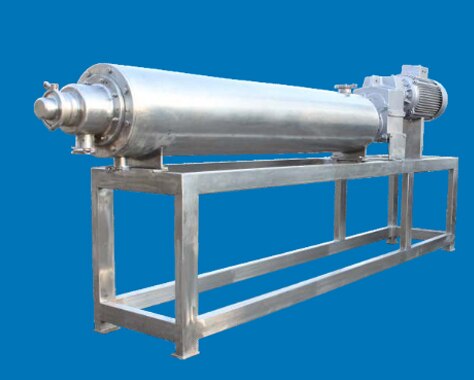
- Scraped Surface Heat Exchangers
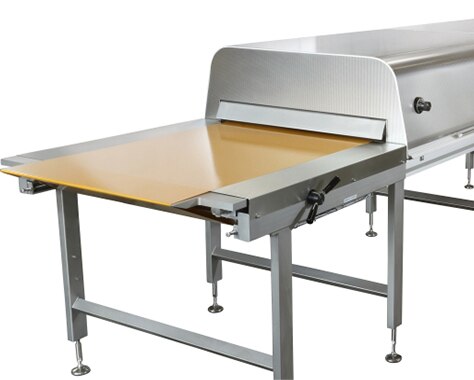
- Cooling Tunnels
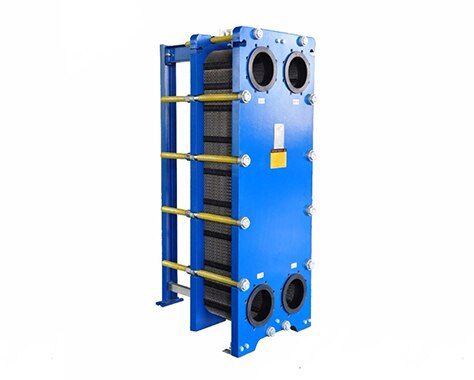
- Gasketed Plate Heat Exchangers
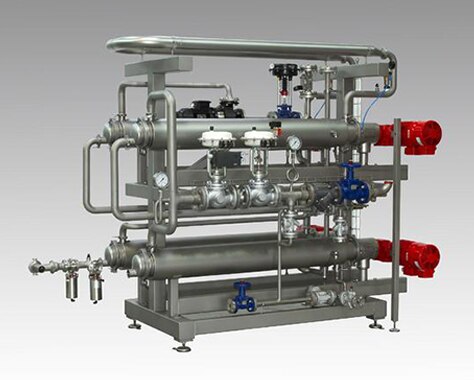
Some typical illustrations below:
Specific Machine Cooling for Packaging Machines
At the end of production, almost all food and drink needs to be packaged. Most companies install machines specifically designed to pack the produce using an automated system. Some of these machines are manufactured by global OEM companies and others are bespoke systems, designed and installed by specialists in the field.
Irrespective of their origins, most of these machines adopt the same principle whereby they hermetically seal the food within a container to preserve shelf life.
The sealing process uses a heated tool to apply the seal and chilled water to set and free the package from the tool. These machines can sometimes be supplied from a central cooling system, or more commonly, will have a dedicated process chiller located at the point of use.
Centralised Cooling Systems vs Dedicated Process Chillers for Multiple Factory Applications
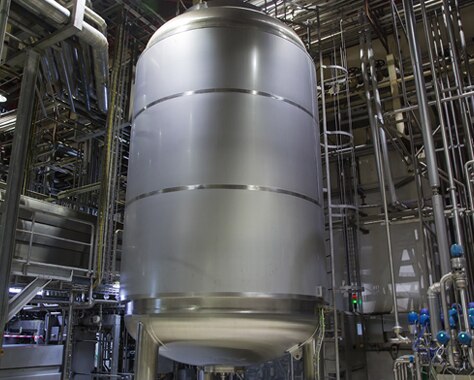
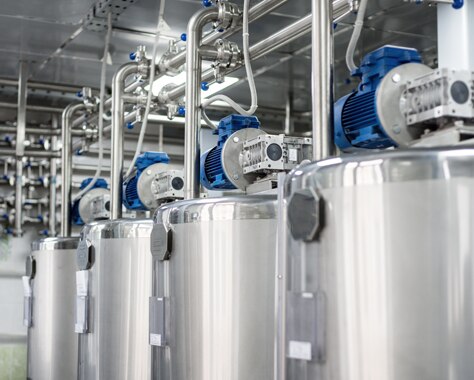
Centralised cooling systems have some benefits but also limitations. If well designed, they can be more efficient than small, single, point of use chillers, and combining multiple chillers in a modular system provides a robust solution. Hyperchill units are designed to be installed into a combined modular system, with the ability to add further chillers to increase capacity to customers’ needs.
Individual point-of-use chillers are generally used where numerous applications within a food or drinks factory have different operating criteria for water temperature and pressure. Hyperchill and Hyperchill Plus units are designed to be fully configurable to meet the specification of these applications.
POTABLE WATER
Potable water is widely used both as a food ingredient and in food preparation. A town’s mains water supply is inconsistent, with temperature values increasing in summer and decreasing through winter.
The solution is to combine a chiller with external heat exchanger and tank, packaged with a control system to deliver a metered volume of water at the specified water temperature.
The system package size is based on batch size, cycle time and water temperature. The chiller water circuit and process potable water circuit must be independent, as food standard regulations do not allow potable water to be directly cooled by a chiller, due to risk of refrigerant contamination. Hyperchill and Hyperchill Plus are ideally suited to potable water packaged systems.